
a practical guide for sustainable performance
Supporting your mental health at work

Table of contents (TL;DR)
- What “supporting mental health at work” actually means
- The reality check: this isn’t niche
- Why most workplace wellbeing efforts fail
- The real drivers of stress at work
- What support looks like in practice (for line managers)
- If you’re the employee: what you can do without blaming yourself
- Wellbeing rights and responsibilities
- The founder trap: you can build a toxic workplace for one
- The slow business version of “support”
- FAQs about mental health at work
- References

What “supporting mental health at work” actually means
Let’s start with what “mental health at work” actually means, because it’s often treated like a side issue when it’s really a work design issue.
Mental health includes our emotional, psychological and social wellbeing; it affects how we think, feel and behave, and it can influence how we handle stress, relate to others and make decisions. In other words, it’s not separate from performance, it’s part of how work gets done.
So “support” isn’t telling people to meditate harder. It’s reducing the things at work that reliably damage wellbeing, like excessive workload, constant urgency, low control, unclear expectations and poor recovery time, and putting practical support in place when someone is struggling.
The reality check: this isn’t niche
In 2024/25, 964,000 workers experienced work-related stress, depression or anxiety, and this contributed to 22.1 million working days lost.
To make that personal (and harder to ignore), the HSE also reports that for stress, depression or anxiety, people took around 22.9 days off work on average.
This is not a “few sensitive people”. This is a work design problem at national scale. [1]
Why most workplace wellbeing efforts fail
Because they’re add-ons. The CIPD’s Health and Wellbeing at Work report keeps pointing to the same thing: heavy workloads are one of the most common causes of stress-related absence (in the view of respondents). [2]
If the root cause is workload and pace, then wellbeing initiatives that don’t address them are just noise. You can’t out-breathe a workload problem.
Wellbeing is becoming a strategy, not a perk
A useful signal from the corporate world (even if you roll your eyes at it) is that “wellbeing” is being reframed as strategic risk management rather than a fluffy benefit. Calm’s 2026 trend summary explicitly frames workforce wellbeing as a strategic priority rather than a perk, with increasing emphasis on personalised support.
If your business model relies on urgency, adrenaline, and “just push through”, it’s not high-performing. It’s fragile.

The real drivers of stress at work
1) Workload that doesn’t match reality
Too much to do, too little time, unrealistic deadlines, or constant “can you just” requests that add up.
2) Pace and urgency as defaults
When everything is urgent, nothing is. The body treats constant urgency like a constant threat.
3) Low control and constant switching
No autonomy, endless interruptions, and context switching. This hits neurodivergent people especially hard.
4) Ambiguity and moving goalposts
Unclear priorities, unclear success measures, and shifting expectations.
5) Communication overload
Always-on messages, meetings as a reflex, and response time expectations that quietly become a second job.
If you recognise these, good. That means you’ve found levers you can pull.

What support looks like in practice (for line managers)
- Pace design: set a sustainable default. If your plan assumes everyone is at 100% every day, you don’t have a plan; you’ve got a fantasy.
- Boundary infrastructure: make expectations visible. This helps everyone, but it’s especially protective for energy-limited and neurodivergent people because it reduces ambiguity and the need for constant vigilance.
- Job design: reduce the stressors at source. “Reasonable adjustments” often look like very ordinary changes: more structure, clearer prioritisation, different supervision, and additional support.
- Culture: stop rewarding self-sacrifice. If the “best” person is the one who replies fastest, stays the latest, and never rests, you are training everyone to burn out.
If you’re the employee: what you can do without blaming yourself
Name the stressor, not your personality
“The pace and constant urgency are affecting my ability to work effectively.”
“Too many priorities are competing; I need help deciding the priority.”
Ask for a specific adjustment
“Can I have meeting-free mornings so I can do focused work?”
“Can we shift deadlines or redistribute tasks for two weeks while I stabilise?”
“Can we set response time expectations so I’m not ‘on alert’ all day?”
Use scripts (because tired brains don’t improvise well)
“I’m at capacity. What would you like me to deprioritise?”
“I don’t have the bandwidth for a call today. Can you send it in writing and I’ll respond tomorrow?”
Wellbeing rights and responsibilities
Be sure to understand the basics:
- Acas states employers have a duty of care and should do all they reasonably can to support workers’ health, safety and wellbeing; this includes risk assessments and protecting staff from discrimination. [4]
- Employers must make reasonable adjustments for disabled workers so they’re not substantially disadvantaged; this can include physical or mental health conditions. [5]
- Neurodivergent workers do not necessarily need a diagnosis to be considered disabled under the Equality Act, and employers should offer support and reasonable adjustments. [6]
If you’re reading this as a founder or manager: don’t wait until someone is off sick to “support them”. By then, you’re in damage control.
The founder trap: you can build a toxic workplace for one
If you’re self-employed, you might be thinking: “Cool, but I don’t have an employer.” You do. It’s you. Plus you have to deal with clients (and your inbox). Founders can often end up recreating the same stressors:
- Workload that exceeds reality (because you’re doing delivery, marketing, admin, sales).
- Urgency as a default (because you’re scared of losing clients).
- Low control (because client expectations set the rules).
- Constant switching (because everything is you)
Supporting mental health at work, as a founder, means designing your business to match your energy, not your fear.
The slow business version of “support”
Choose a delivery model that doesn’t require constant real-time availability:
- Set response windows.
- Shrink your offer menu.
- Adopt minimum viable marketing (small, repeatable, sustainable).
This is exactly what I teach inside The Slow Business Method: we build a system that protects your health, capacity, and income. The programme is 8 weeks, with weekly live teaching (1 hour) plus a 30-minute open Q&A/socialisation cal. And yes, it’s built for fluctuating energy and capacity.

FAQ: supporting mental health at work
What does supporting mental health at work actually involve?
Reducing stressors at source (workload, pace, clarity, control), plus practical adjustments and clear expectations. It’s not about adding self-care tasks on top of an impossible workload.
What are reasonable adjustments for mental health?
They’re changes to remove or reduce disadvantage, such as altered working arrangements, support, structure, or changes in how work is done; Acas gives examples like regular check-ins and help prioritising work.
What if I’m neurodivergent and don’t have a diagnosis?
Acas notes you don’t necessarily need a diagnosis to be considered disabled under the Equality Act, and employers should still offer support and reasonable adjustments.
Why does stress keep happening even when workplaces offer wellbeing initiatives?
Because the main drivers are often workload and job design, if those don’t change, initiatives become surface-level.
What if I’m self-employed?
Then supporting mental health at work means designing your offers, boundaries, and marketing to match your capacity. You’re not weak; you’re running a business inside a human body with limits.
What if I’m self-employed?
Then supporting mental health at work means designing your offers, boundaries, and marketing to match your capacity. You’re not weak; you’re running a business inside a human body with limits.
References
[1] Health and Safety Executive (HSE), Work-related stress, depression or anxiety statistics in Great Britain (2024/25 data)(as summarised by WorkRight). https://workright.campaign.gov.uk/understanding-the-impact-of-stress-at-work
[2] Chartered Institute of Personnel and Development (2025) Health and wellbeing at work 2025 (September 2025). https://www.cipd.org/globalassets/media/knowledge/knowledge-hub/reports/2025-pdfs/8920-Health-and-wellbeing-report-2025.pdf
[3] Calm (2026) Workforce well-being in 2026: 5 trends consultants can’t afford to ignore (published January 2026). Accessed 15 February 2026. https://health.calm.com/resources/blog/workforce-well-being-in-2026-5-trends-consultants-cant-afford-to-ignore
[4] Acas (2025) Mental health and the law – supporting mental health at work (updated 16 January 2025). Accessed 15 February 2026. https://www.acas.org.uk/supporting-mental-health-workplace
[5] Gov.UK Disability Rights https://www.gov.uk/rights-disabled-person/employment
[6] Acas (2025) Adjustments for neurodiversity – reasonable adjustments at work (updated 30 January 2025). Accessed 15 February 2026. https://www.acas.org.uk/reasonable-adjustments/adjustments-for-neurodiversity
Get your weekly dose of calm and clarity
If you’re ready to protect your energy, The Weekly Pause is for you. Every Monday, I share gentle reminders, research-backed insights, and practical tips to help you work smarter, not harder.
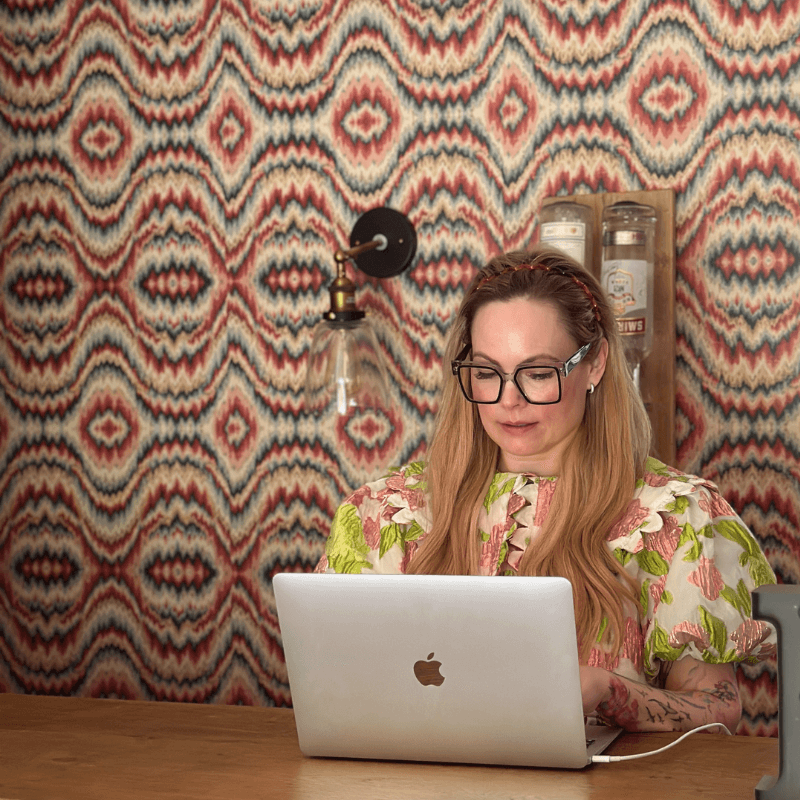
Emm McAndrew

The Slow Business Woman
Emm McAndrew knows what it means to juggle chronic illness, disability, neurodivergence and family life while running a business. She lives with ME, cPTSD, AuDHD, and cervical spondylosis, meaning she navigates sensory overwhelm, executive-function differences and family life while running a business.
The Slow Businesswoman provides information and education only. Nothing on this website, in blogs, emails, or courses should be considered medical, psychological, legal, tax, or financial advice, or a substitute for advice from a qualified professional who knows your circumstances. You remain responsible for your decisions; no liability is accepted for any loss or harm arising from use of the content. If you have concerns about a health or mental health condition, speak to your GP or another qualified clinician. Guest opinions are their own and do not necessarily reflect the views of The Slow Businesswoman.