Contact The Slow Businesswoman

Have a question, idea or just want to say hello? I’d love to hear from you. Whether you’re juggling energy, family or work, drop me a line and I’ll get back to you.

Get your weekly dose of calm and clarity

If you’re ready to protect your energy, The Weekly Pause is for you. Every Monday, I share gentle reminders, research-backed insights, and practical tips to help you work smarter, not harder.
@theslowbusinesswoman
Emmaline | work-health balance

@theslowbusinesswoman

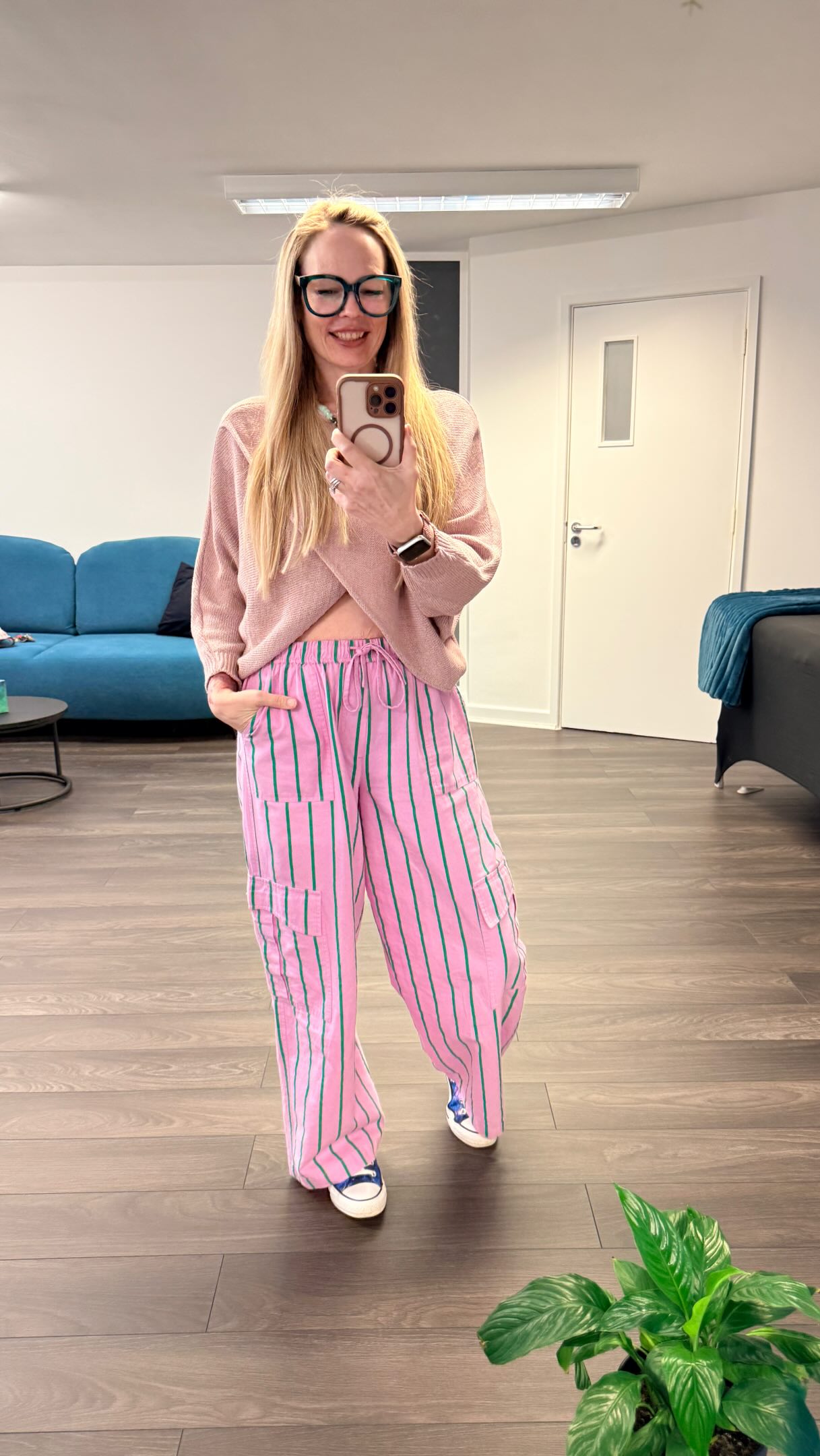
  • Over 12 days since I stepped outside the house…

* Please understand that we all experience chronic illness, disability, and neurodivergence differently. This is my experience (because it’s kinda my page) *

What do you wish people understood about dynamic disability, invisible illness, or fluctuating conditions?
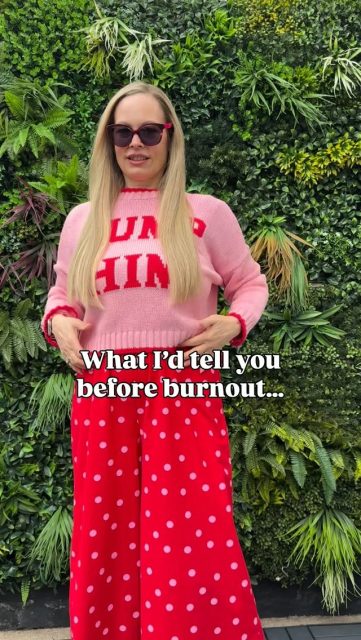
  • What I’d tell you before you ended up in burnout…🫠

I’ll keep banging this drum until all the women with limited energy feel confident with using professional boundaries, pushing back when being asked to push through, and wearing themselves out to fund someone else’s lifestyle (their boss).
  • Go on! Let me tell your fortune…it’ll be like those fortune fish you used to get in Xmas crackers 🙌🐟
  • Who can relate?

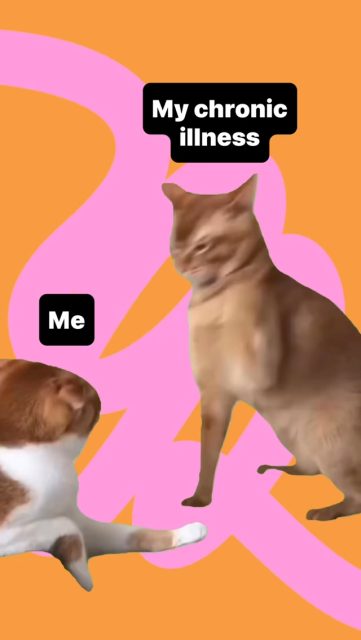
This has been me for the last few months. PEM (post-exertional malaise) has been absolutely kicking my butt 🫩

I’ve hardly left the house and missed out on so many things. This is why I teach my community how to work for themselves, because an employer just wouldn’t be able to give me the adjustments and adaptations I need to be able to work. Without work there’s no mortgage payment, no food on the table, and no heating on.

—————
Have we met? I’m Emm, aka The Slow Businesswoman. My programme shows women with limited energy how to work for themselves in a way that protects their health. Follow for tips, reminders, and a community with other women who are living with chronic illness, disability, and neurodivergence. Check bio for more.
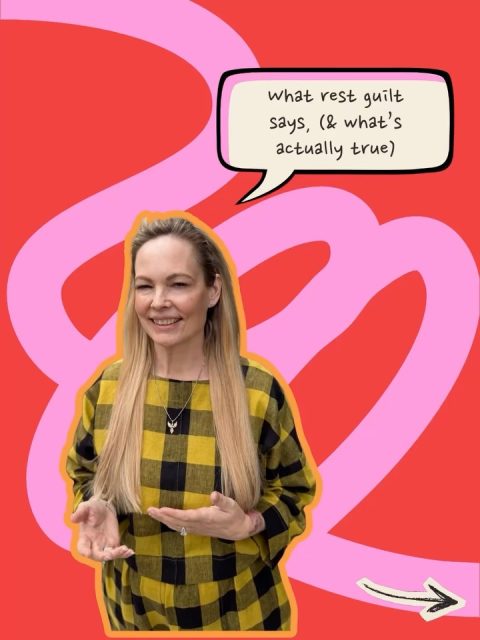
  • Rest guilt always turns up with a list.

Here are the five things it says the most, and what’s actually true. Any to add?

Comment “mypause” and I’ll send you the link to my weekly newsletter.

👋 I’m Emm McAndrew, aka The Slow Businesswoman, and I teach women with energy-limiting conditions how to set up and run a business (or self-employment) on their terms, protecting their health and income. 

Visual explanation: Eight slides on bright backgrounds in red, orange, pink and beige, with hand-drawn hearts, stars and dashed arrows. Emm, a cis white woman with long blonde hair, appears as a cut-out on the cover and on slides 2, 4 and 7, with stock photos of other women on the rest. The text reads, in order:

Slide 1: What rest guilt says, (& what’s actually true). A pink scribble sits behind a speech bubble.
Slide 2: Rest guilt turns up the minute you sit down, usually with a list. Here’s what it says, and what the week really looks like...
Slide 3: What guilt says: You’ve barely done anything today. What’s true: You’ve managed your energy all day, which is the part of the work nobody sees. A woman in a powered wheelchair looks at her phone.
Slide 4: What guilt says: Everyone else manages without stopping. What’s true: They’re working with a different amount of energy, so their pace tells you nothing about yours.
Slide 5: What guilt says: Just one more thing, then you’ll rest. What’s true: One more thing is how the energy payback pattern starts, and the crash that follows costs more than the rest would have. Four photos of women at work and at rest, including one reading in a wheelchair and one at a desk with a laptop and microphone.
Slide 6: What guilt says: Rest is what you do when the work is finished. What’s true: With fluctuating energy the work is never finished, so rest has to be planned in like any other task. A woman frowns at a tablet while scratching her head.
Slide 7: What guilt says: You’ll fall behind. What’s true: Pacing is what keeps you going.
Slide 8: Comment “mypause” and I’ll send you the link to join my weekly newsletter with more insight and support for women with limited energy.

Audio track: What’s Up Hardmax.
  • Most business advice comes from people whose energy supply is the same every day. Mine isn’t, and yours might not be either.

I’m Emm, a chartered marketer who rebuilt my working life around my chronic illnesses, disability, and neurodivergence. Now I show other women how to do the same, with realistic boundaries and rest/recovery built in.

Emm, a cis white woman with long blonde hair, appears in a series of short clips in different spots around her home, plus one shot looking down at her feet on a path of autumn leaves. She takes a mirror selfie in a hallway, stands full length in a room with a wooden floor, lies back for a close-up, and stands in a room with timber beams and an armchair. Red speech bubbles labelled “Them:” show common hustle sayings. Pink speech bubbles labelled “Me:” give her replies. The text overlays read, in order: How I’m different to others who teach you how to do business... Them: “Rise & grind!” Me: “Start when your body says yes”. Them: “You can sleep when you’re old”. Me: “Rest now AND later”. Them: “Just push through”. Me: “That’s how you crash”. Them: “Fake it ‘til you make it”. Me: “Pace so you still can”. Them: “Finish the work then take a break”. Me: “Rest is part of the plan”. Them: “But we all have the same 24hrs”. Me: “But not the same body”. The final frame is an orange background with the words “Follow for more”, and Emm seen from behind.

Audio: Firestarter by The Prodigy

If you’re tired of being told to push through, follow for honest, practical content that works with your body, not against it.
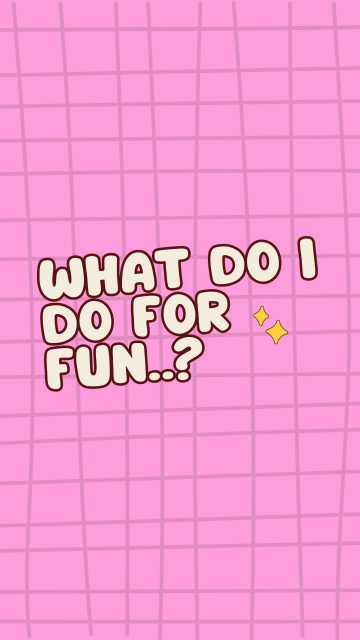
  • Okay, so this is tongue-in-cheek, but that’s not to say I don’t spend most of my time doing these things…and it’s certainly not for fun 😒

I’m a disabled, chronically ill businesswoman, so along with the aggressive pacing comes some VERY early nights (sometimes as early as 2pm for me) and many hours chasing appointments and the like.

I’ve got it so down pat, I teach other women how to start their own business with limited energy too.

Visual description
Various short videos of Emm (cis white woman in her 50s) in bed with the text, “What do I do for fun? Girl, I’m 51 and have chronic illnesses. I chase specialists, aggressively pace, binge-watch TV, and go to bed at 4pm.”
  • Sound on if you enjoy clip changes on the beat 😘

Here’s a few days when my chronic illnesses gave me a bit of grace ♥️ which doesn’t happen very often.

Keen-eyed viewers will note that these photos and clips are many years apart. Over time, my physical world has become smaller, which means I don’t leave the house for weeks at a time.

Can you relate?

Chronic illness awareness, disability content, ME, MCAS, EDS, limited energy.
  • Take this bitesized video course if you want a clear, realistic plan for moving from employment to self-employment, including what you’re offering, who it’s for, what to do first, and what can wait, so you stop wasting time on the wrong tasks and start taking the next sensible steps with less stress, fewer decisions, and boundaries that protect your energy.

What You’ll Learn:

- How to set up working for yourself while you’re still employed by someone else
- How to develop your first income stream
- How to set boundaries early, so your business doesn’t become another job
- A realistic 3-month plan

What’s Included:

- 10 pre-recorded videos you can watch in short bursts
- Video transcripts
- A workbook (full colour & black and white versions)
- Access to my private learning portal which houses all your materials
- Now available at a special price of £7 for women with a chronic illness, disablity, or neurodivergence: because we already pay out enough as women with disabilities.

Link in bio or comment “Rewire” to get it sent straight to your DMs ♥️
  • Have any to add?

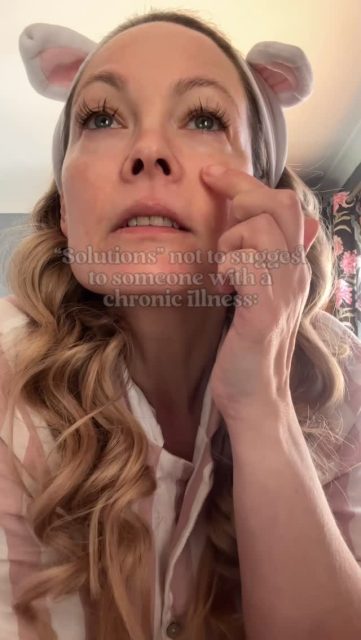
If you’ve tried to suggest something you thought was helpful to a person with chronic illness, it may have been met with some disdain. It’s not that we don’t want help, it’s more likely that we’ve heard it, and tried it.

Sometimes the most helpful thing you can do is nothing - and I say that with love ♥️

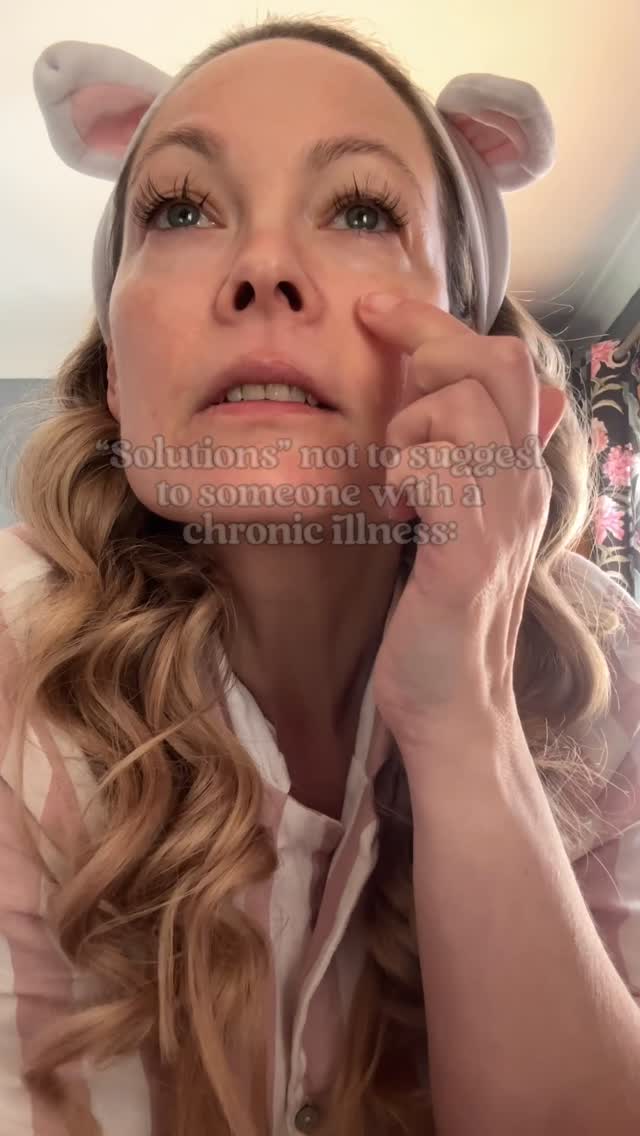
VD: Emm, a cis white woman with long blonde hair, sits close to the camera in a bedroom wearing a grey headband with bunny ears. She dabs face cream from a tube onto her cheeks, forehead and chin and rubs it in, with a deadpan expression. The text overlays read: “Solutions” not to suggest to someone with a chronic illness: Yoga. Getting out more. Being more positive. Losing or putting on weight. More sleep. The gym. Insert supplement here.
  • Welcome to “NO”vember! A month of saying no to the things that make life with a chronic illness or disability harder. 

Have we met? I’m Emm McAndrew, aka The Slow Businesswoman. I teach women with energy-limiting conditions such as chronic illness and disability, how to build a business that works around their health.

Visual description:
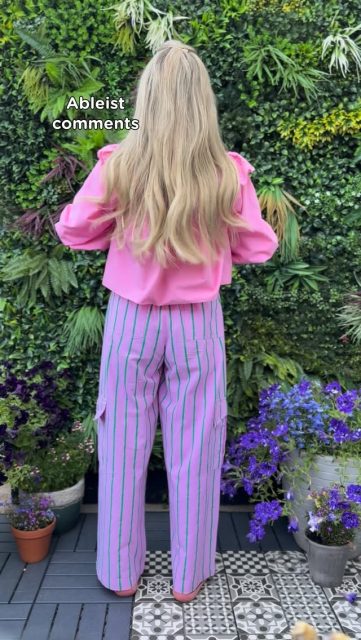
Emm, a cis white woman with long blonde hair, stands with her back to the camera in front of a green plant wall. The text overlays read, in order: Welcome to “NO”vember. Where we’re saying no to... Ableist comments. Working when sick. Intrusive questioning. People pleasing. Pretending you’re fine. Hustle culture. Unsolicited health advice. Working without adjustments. Masking. Not being believed. Pushing then crashing. Feeling guilty. Medical gaslighting. Downplaying symptoms. Justifying your needs. Feeling like a burden. Share to spread the word.
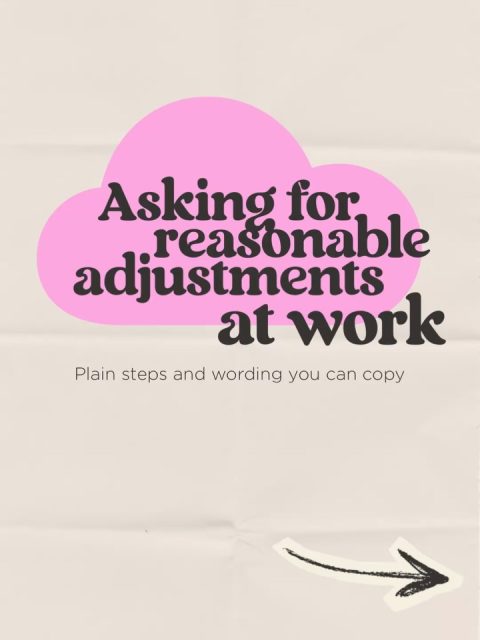
  • Asking for reasonable adjustments can feel awkward, especially when your energy changes from day to day. This post gives you plain steps and wording you can copy.

Reasonable adjustments are changes at work that remove or reduce a disadvantage linked to your disability. In England, Scotland and Wales, employers have a legal duty to make them if you’re disabled under the Equality Act. There are special rules for conditions that come and go, as long as the effect on daily life is substantial and long term.

You don’t have to ask in writing. But agreed adjustments should be confirmed in writing, kept on record and reviewed regularly. That’s why steps 2, 3 and 5 are there.

Save this for your next conversation with your line manager, and send it to someone who’s putting off asking. If you’re unsure where you stand, the Acas helpline can help.

This is general information, not legal advice. Northern Ireland has different rules.

Sources: Acas and GOV.UK.

A pink background with a crinkled paper texture. In the bottom right, Emm, a cis white woman with long blonde hair, stands side-on with one hand shielding her eyes from the sun. She wears pink sunglasses, a pink puff-sleeved top and pink and blue striped trousers, with a red outline around her. A small orange button at the bottom reads theslowbusinesswoman.com. The text overlay reads: What are reasonable adjustments? Reasonable adjustments are changes at work that remove or reduce a disadvantage linked to your disability. In England, Scotland and Wales, employers have a legal duty to make them if you’re disabled under the Equality Act. For example: flexible hours, working from home, or breaks at set times.

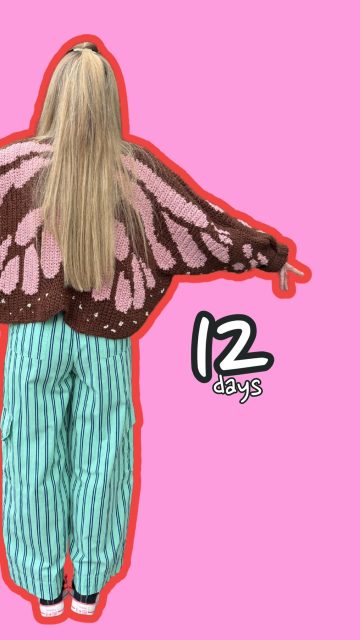
 orange background with a crinkled paper texture. In the bottom right, Emm, a cis white woman with long blonde hair, is seen from behind with her arms stretched out wide. She wears a brown cardigan with pink butterfly wings on the back and green and white striped trousers, with a red outline around her. A small orange button at the bottom reads theslowbusinesswoman.com. The text overlay reads: 1. Work out what you need first. Start with what makes work harder, then what would make it easier. Be specific. Instead
  • Full-time job, no pay, no holiday... Who would choose this? Well, that’s kind of the point; it chooses us.

Have we met? I’m Emm McAndrew, aka The Slow Businesswoman. I teach women with energy-limiting conditions how to set up and run a business on their terms, protecting their health and income. theslowbusinesswoman.com

AI disclaimer: I use Claude for content research, help with caption drafting, and for visual descriptions. I use Canva for visuals and edits. I build my Reels in the Edits app.

Reel description
Emm, a cis white woman with long blonde hair, appears in a series of short clips. She wears sunglasses outdoors under a wooden pergola, takes mirror selfies and stands in several rooms, crouches then stands in front of a green plant wall, films herself in a field of green crops, and finishes lying back on a sofa in a pink top and red glasses. The text overlays read, in order: POV: Having a disability or chronic illness is a full-time job. Here’s why... Repeating your history to every new professional = inducting every new starter. Tracking symptoms and triggers = logging every single data point for the annual report. Planning your week around your energy = building everyone’s rota. Proving you’re ill enough to be believed = sitting through the worst performance review. Researching symptoms, treatments, and meds = doing the boring, but compulsory, staff training. Coordinating a GP, a consultant and a specialist who don’t talk to each other = managing a team who never reply. Having no days off from your body = being on call 24 hours a day. Doing all of this alongside an actual job? Exhausting!
  • Taking breaks, stopping on time and not feeling guilty about any of it! Save this one for the days you need the reminder, or send it to someone who does.

Video description in pinned comment ♥️
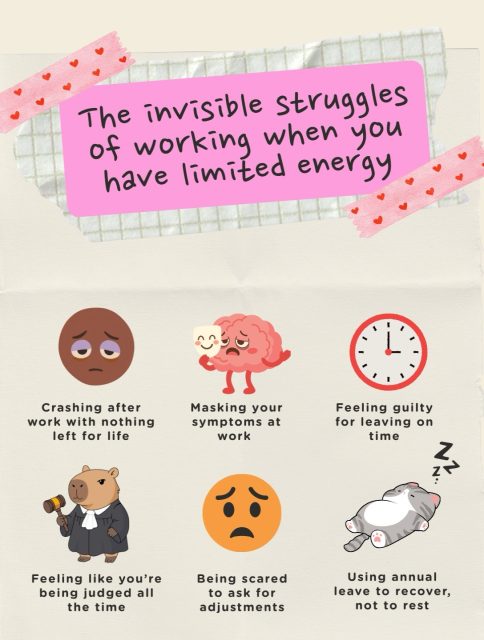
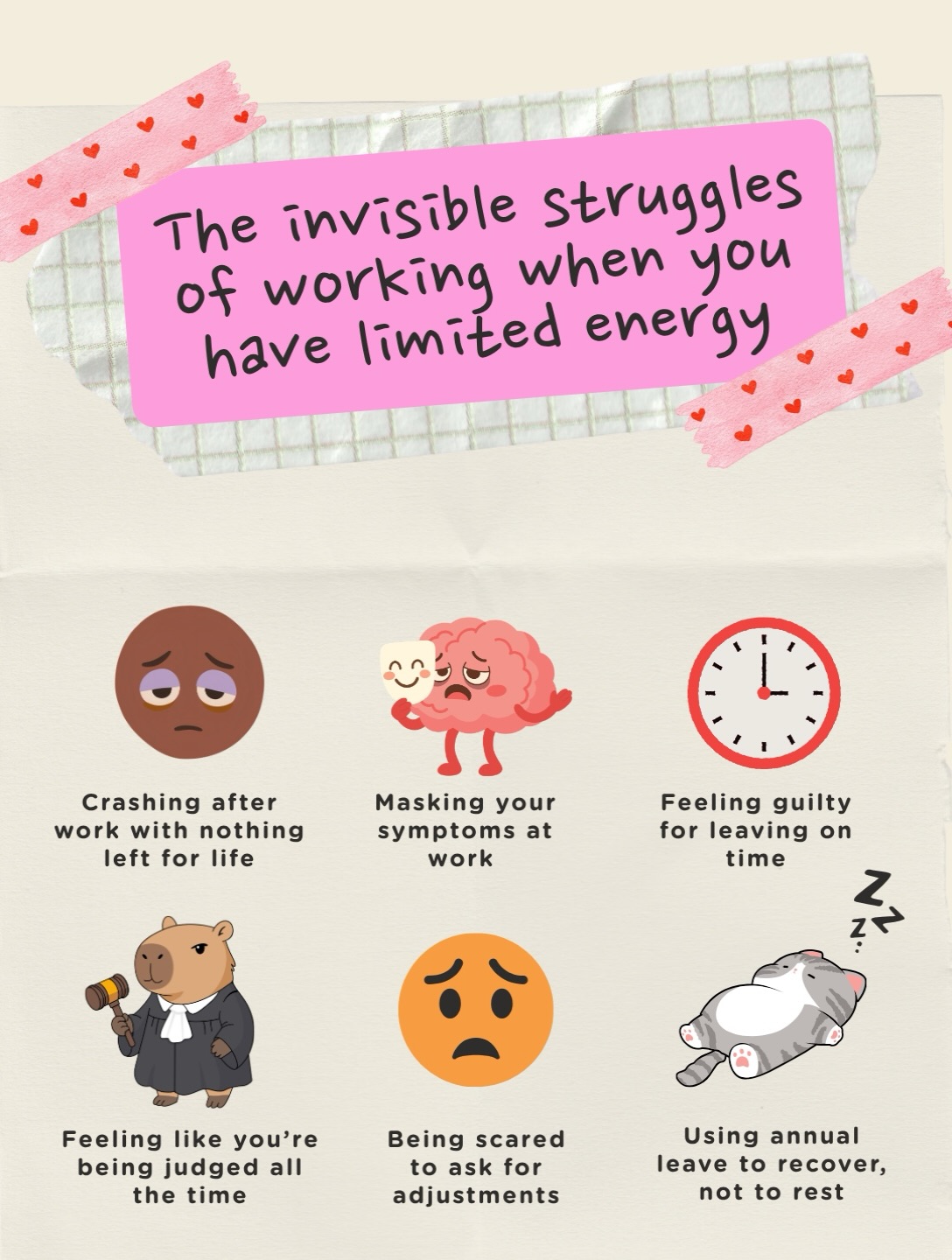
  • The invisible struggles of working a job when you have limited energy that most people don’t see 😒

There’s so much masking we do as women with chronic illness, disability, and neurodivergence. And it costs us big time, perhaps more energy that we even realise.

Even doing one thing on this list regularly puts us on the back foot when it comes to work (some of us do all of them 😱), so please try to have compassion when working with us - it’s free and we’ll love you for it ♥️

The alt text feature has been populated by me for this image.
  • A job that wants you at your desk at the same time every day, in back-to-back meetings, with no sick days left when you flare, doesn’t leave much room for a body that changes from one day to the next 🤔

That’s a structure problem…and structures can change, although that doesn’t mean that they will. That’s why self-employment is often the only choice for those of us with disability or chronic illness.

Send this to someone who needs to know. And if you’re happy to share, I’d love to hear what your last job expected that your body couldn’t give 💛

AI disclaimer: I use Claude for visual description drafting, Canva for minor visual edits, and the Edits app for adding text and cutouts.
Over 12 days since I stepped outside the house…* Please understand that we all experience chronic illness, disability, and neurodivergence differently. This is my experience (because it’s kinda my page) *What do you wish people understood about dynamic disability, invisible illness, or fluctuating conditions?
1 day ago
177
View on Instagram |
1/16
What I’d tell you before you ended up in burnout…🫠I’ll keep banging this drum until all the women with limited energy feel confident with using professional boundaries, pushing back when being asked to push through, and wearing themselves out to fund someone else’s lifestyle (their boss).
2 days ago
164
View on Instagram |
2/16
Go on! Let me tell your fortune…it’ll be like those fortune fish you used to get in Xmas crackers 🙌🐟
4 days ago
123
View on Instagram |
3/16
Who can relate?This has been me for the last few months. PEM (post-exertional malaise) has been absolutely kicking my butt 🫩I’ve hardly left the house and missed out on so many things. This is why I teach my community how to work for themselves, because an employer just wouldn’t be able to give me the adjustments and adaptations I need to be able to work. Without work there’s no mortgage payment, no food on the table, and no heating on.————— Have we met? I’m Emm, aka The Slow Businesswoman. My programme shows women with limited energy how to work for themselves in a way that protects their health. Follow for tips, reminders, and a community with other women who are living with chronic illness, disability, and neurodivergence. Check bio for more.
7 days ago
356
View on Instagram |
4/16
Rest guilt always turns up with a list.

Here are the five things it says the most, and what’s actually true. Any to add?

Comment “mypause” and I’ll send you the link to my weekly newsletter.

👋 I’m Emm McAndrew, aka The Slow Businesswoman, and I teach women with energy-limiting conditions how to set up and run a business (or self-employment) on their terms, protecting their health and income. 

Visual explanation: Eight slides on bright backgrounds in red, orange, pink and beige, with hand-drawn hearts, stars and dashed arrows. Emm, a cis white woman with long blonde hair, appears as a cut-out on the cover and on slides 2, 4 and 7, with stock photos of other women on the rest. The text reads, in order:

Slide 1: What rest guilt says, (& what’s actually true). A pink scribble sits behind a speech bubble.
Slide 2: Rest guilt turns up the minute you sit down, usually with a list. Here’s what it says, and what the week really looks like...
Slide 3: What guilt says: You’ve barely done anything today. What’s true: You’ve managed your energy all day, which is the part of the work nobody sees. A woman in a powered wheelchair looks at her phone.
Slide 4: What guilt says: Everyone else manages without stopping. What’s true: They’re working with a different amount of energy, so their pace tells you nothing about yours.
Slide 5: What guilt says: Just one more thing, then you’ll rest. What’s true: One more thing is how the energy payback pattern starts, and the crash that follows costs more than the rest would have. Four photos of women at work and at rest, including one reading in a wheelchair and one at a desk with a laptop and microphone.
Slide 6: What guilt says: Rest is what you do when the work is finished. What’s true: With fluctuating energy the work is never finished, so rest has to be planned in like any other task. A woman frowns at a tablet while scratching her head.
Slide 7: What guilt says: You’ll fall behind. What’s true: Pacing is what keeps you going.
Slide 8: Comment “mypause” and I’ll send you the link to join my weekly newsletter with more insight and support for women with limited energy.

Audio track: What’s Up Hardmax.
Rest guilt always turns up with a list.Here are the five things it says the most, and what’s actually true. Any to add?Comment “mypause” and I’ll send you the link to my weekly newsletter.👋 I’m Emm McAndrew, aka The Slow Businesswoman, and I teach women with energy-limiting conditions how to set up and run a business (or self-employment) on their terms, protecting their health and income.Visual explanation: Eight slides on bright backgrounds in red, orange, pink and beige, with hand-drawn hearts, stars and dashed arrows. Emm, a cis white woman with long blonde hair, appears as a cut-out on the cover and on slides 2, 4 and 7, with stock photos of other women on the rest. The text reads, in order:Slide 1: What rest guilt says, (& what’s actually true). A pink scribble sits behind a speech bubble. Slide 2: Rest guilt turns up the minute you sit down, usually with a list. Here’s what it says, and what the week really looks like... Slide 3: What guilt says: You’ve barely done anything today. What’s true: You’ve managed your energy all day, which is the part of the work nobody sees. A woman in a powered wheelchair looks at her phone. Slide 4: What guilt says: Everyone else manages without stopping. What’s true: They’re working with a different amount of energy, so their pace tells you nothing about yours. Slide 5: What guilt says: Just one more thing, then you’ll rest. What’s true: One more thing is how the energy payback pattern starts, and the crash that follows costs more than the rest would have. Four photos of women at work and at rest, including one reading in a wheelchair and one at a desk with a laptop and microphone. Slide 6: What guilt says: Rest is what you do when the work is finished. What’s true: With fluctuating energy the work is never finished, so rest has to be planned in like any other task. A woman frowns at a tablet while scratching her head. Slide 7: What guilt says: You’ll fall behind. What’s true: Pacing is what keeps you going. Slide 8: Comment “mypause” and I’ll send you the link to join my weekly newsletter with more insight and support for women with limited energy.Audio track: What’s Up Hardmax.
1 week ago
195
View on Instagram |
5/16
Most business advice comes from people whose energy supply is the same every day. Mine isn’t, and yours might not be either.I’m Emm, a chartered marketer who rebuilt my working life around my chronic illnesses, disability, and neurodivergence. Now I show other women how to do the same, with realistic boundaries and rest/recovery built in.Emm, a cis white woman with long blonde hair, appears in a series of short clips in different spots around her home, plus one shot looking down at her feet on a path of autumn leaves. She takes a mirror selfie in a hallway, stands full length in a room with a wooden floor, lies back for a close-up, and stands in a room with timber beams and an armchair. Red speech bubbles labelled “Them:” show common hustle sayings. Pink speech bubbles labelled “Me:” give her replies. The text overlays read, in order: How I’m different to others who teach you how to do business... Them: “Rise & grind!” Me: “Start when your body says yes”. Them: “You can sleep when you’re old”. Me: “Rest now AND later”. Them: “Just push through”. Me: “That’s how you crash”. Them: “Fake it ‘til you make it”. Me: “Pace so you still can”. Them: “Finish the work then take a break”. Me: “Rest is part of the plan”. Them: “But we all have the same 24hrs”. Me: “But not the same body”. The final frame is an orange background with the words “Follow for more”, and Emm seen from behind.Audio: Firestarter by The ProdigyIf you’re tired of being told to push through, follow for honest, practical content that works with your body, not against it.
2 weeks ago
173
View on Instagram |
6/16
Okay, so this is tongue-in-cheek, but that’s not to say I don’t spend most of my time doing these things…and it’s certainly not for fun 😒I’m a disabled, chronically ill businesswoman, so along with the aggressive pacing comes some VERY early nights (sometimes as early as 2pm for me) and many hours chasing appointments and the like.I’ve got it so down pat, I teach other women how to start their own business with limited energy too.Visual description Various short videos of Emm (cis white woman in her 50s) in bed with the text, “What do I do for fun? Girl, I’m 51 and have chronic illnesses. I chase specialists, aggressively pace, binge-watch TV, and go to bed at 4pm.”
2 weeks ago
6915
View on Instagram |
7/16
Sound on if you enjoy clip changes on the beat 😘Here’s a few days when my chronic illnesses gave me a bit of grace ♥️ which doesn’t happen very often.Keen-eyed viewers will note that these photos and clips are many years apart. Over time, my physical world has become smaller, which means I don’t leave the house for weeks at a time.Can you relate?Chronic illness awareness, disability content, ME, MCAS, EDS, limited energy.
2 weeks ago
19
View on Instagram |
8/16
Take this bitesized video course if you want a clear, realistic plan for moving from employment to self-employment, including what you’re offering, who it’s for, what to do first, and what can wait, so you stop wasting time on the wrong tasks and start taking the next sensible steps with less stress, fewer decisions, and boundaries that protect your energy.What You’ll Learn:- How to set up working for yourself while you’re still employed by someone else - How to develop your first income stream - How to set boundaries early, so your business doesn’t become another job - A realistic 3-month planWhat’s Included:- 10 pre-recorded videos you can watch in short bursts - Video transcripts - A workbook (full colour & black and white versions) - Access to my private learning portal which houses all your materials - Now available at a special price of £7 for women with a chronic illness, disablity, or neurodivergence: because we already pay out enough as women with disabilities.Link in bio or comment “Rewire” to get it sent straight to your DMs ♥️
2 weeks ago
102
View on Instagram |
9/16
Have any to add?If you’ve tried to suggest something you thought was helpful to a person with chronic illness, it may have been met with some disdain. It’s not that we don’t want help, it’s more likely that we’ve heard it, and tried it.Sometimes the most helpful thing you can do is nothing - and I say that with love ♥️VD: Emm, a cis white woman with long blonde hair, sits close to the camera in a bedroom wearing a grey headband with bunny ears. She dabs face cream from a tube onto her cheeks, forehead and chin and rubs it in, with a deadpan expression. The text overlays read: “Solutions” not to suggest to someone with a chronic illness: Yoga. Getting out more. Being more positive. Losing or putting on weight. More sleep. The gym. Insert supplement here.
3 weeks ago
213
View on Instagram |
10/16
Welcome to “NO”vember! A month of saying no to the things that make life with a chronic illness or disability harder.Have we met? I’m Emm McAndrew, aka The Slow Businesswoman. I teach women with energy-limiting conditions such as chronic illness and disability, how to build a business that works around their health.Visual description: Emm, a cis white woman with long blonde hair, stands with her back to the camera in front of a green plant wall. The text overlays read, in order: Welcome to “NO”vember. Where we’re saying no to... Ableist comments. Working when sick. Intrusive questioning. People pleasing. Pretending you’re fine. Hustle culture. Unsolicited health advice. Working without adjustments. Masking. Not being believed. Pushing then crashing. Feeling guilty. Medical gaslighting. Downplaying symptoms. Justifying your needs. Feeling like a burden. Share to spread the word.
3 weeks ago
1088
View on Instagram |
11/16
Asking for reasonable adjustments can feel awkward, especially when your energy changes from day to day. This post gives you plain steps and wording you can copy.

Reasonable adjustments are changes at work that remove or reduce a disadvantage linked to your disability. In England, Scotland and Wales, employers have a legal duty to make them if you’re disabled under the Equality Act. There are special rules for conditions that come and go, as long as the effect on daily life is substantial and long term.

You don’t have to ask in writing. But agreed adjustments should be confirmed in writing, kept on record and reviewed regularly. That’s why steps 2, 3 and 5 are there.

Save this for your next conversation with your line manager, and send it to someone who’s putting off asking. If you’re unsure where you stand, the Acas helpline can help.

This is general information, not legal advice. Northern Ireland has different rules.

Sources: Acas and GOV.UK.

A pink background with a crinkled paper texture. In the bottom right, Emm, a cis white woman with long blonde hair, stands side-on with one hand shielding her eyes from the sun. She wears pink sunglasses, a pink puff-sleeved top and pink and blue striped trousers, with a red outline around her. A small orange button at the bottom reads theslowbusinesswoman.com. The text overlay reads: What are reasonable adjustments? Reasonable adjustments are changes at work that remove or reduce a disadvantage linked to your disability. In England, Scotland and Wales, employers have a legal duty to make them if you’re disabled under the Equality Act. For example: flexible hours, working from home, or breaks at set times.

 orange background with a crinkled paper texture. In the bottom right, Emm, a cis white woman with long blonde hair, is seen from behind with her arms stretched out wide. She wears a brown cardigan with pink butterfly wings on the back and green and white striped trousers, with a red outline around her. A small orange button at the bottom reads theslowbusinesswoman.com. The text overlay reads: 1. Work out what you need first. Start with what makes work harder, then what would make it easier. Be specific. Instead
Asking for reasonable adjustments can feel awkward, especially when your energy changes from day to day. This post gives you plain steps and wording you can copy.Reasonable adjustments are changes at work that remove or reduce a disadvantage linked to your disability. In England, Scotland and Wales, employers have a legal duty to make them if you’re disabled under the Equality Act. There are special rules for conditions that come and go, as long as the effect on daily life is substantial and long term.You don’t have to ask in writing. But agreed adjustments should be confirmed in writing, kept on record and reviewed regularly. That’s why steps 2, 3 and 5 are there.Save this for your next conversation with your line manager, and send it to someone who’s putting off asking. If you’re unsure where you stand, the Acas helpline can help.This is general information, not legal advice. Northern Ireland has different rules.Sources: Acas and GOV.UK.A pink background with a crinkled paper texture. In the bottom right, Emm, a cis white woman with long blonde hair, stands side-on with one hand shielding her eyes from the sun. She wears pink sunglasses, a pink puff-sleeved top and pink and blue striped trousers, with a red outline around her. A small orange button at the bottom reads theslowbusinesswoman.com. The text overlay reads: What are reasonable adjustments? Reasonable adjustments are changes at work that remove or reduce a disadvantage linked to your disability. In England, Scotland and Wales, employers have a legal duty to make them if you’re disabled under the Equality Act. For example: flexible hours, working from home, or breaks at set times.orange background with a crinkled paper texture. In the bottom right, Emm, a cis white woman with long blonde hair, is seen from behind with her arms stretched out wide. She wears a brown cardigan with pink butterfly wings on the back and green and white striped trousers, with a red outline around her. A small orange button at the bottom reads theslowbusinesswoman.com. The text overlay reads: 1. Work out what you need first. Start with what makes work harder, then what would make it easier. Be specific. Instead
3 weeks ago
16
View on Instagram |
12/16
Full-time job, no pay, no holiday... Who would choose this? Well, that’s kind of the point; it chooses us.Have we met? I’m Emm McAndrew, aka The Slow Businesswoman. I teach women with energy-limiting conditions how to set up and run a business on their terms, protecting their health and income. theslowbusinesswoman.comAI disclaimer: I use Claude for content research, help with caption drafting, and for visual descriptions. I use Canva for visuals and edits. I build my Reels in the Edits app.Reel description Emm, a cis white woman with long blonde hair, appears in a series of short clips. She wears sunglasses outdoors under a wooden pergola, takes mirror selfies and stands in several rooms, crouches then stands in front of a green plant wall, films herself in a field of green crops, and finishes lying back on a sofa in a pink top and red glasses. The text overlays read, in order: POV: Having a disability or chronic illness is a full-time job. Here’s why... Repeating your history to every new professional = inducting every new starter. Tracking symptoms and triggers = logging every single data point for the annual report. Planning your week around your energy = building everyone’s rota. Proving you’re ill enough to be believed = sitting through the worst performance review. Researching symptoms, treatments, and meds = doing the boring, but compulsory, staff training. Coordinating a GP, a consultant and a specialist who don’t talk to each other = managing a team who never reply. Having no days off from your body = being on call 24 hours a day. Doing all of this alongside an actual job? Exhausting!
3 weeks ago
151
View on Instagram |
13/16
Taking breaks, stopping on time and not feeling guilty about any of it! Save this one for the days you need the reminder, or send it to someone who does.Video description in pinned comment ♥️
3 weeks ago
163
View on Instagram |
14/16
The invisible struggles of working a job when you have limited energy that most people don’t see 😒

There’s so much masking we do as women with chronic illness, disability, and neurodivergence. And it costs us big time, perhaps more energy that we even realise.

Even doing one thing on this list regularly puts us on the back foot when it comes to work (some of us do all of them 😱), so please try to have compassion when working with us - it’s free and we’ll love you for it ♥️

The alt text feature has been populated by me for this image.
The invisible struggles of working a job when you have limited energy that most people don’t see 😒There’s so much masking we do as women with chronic illness, disability, and neurodivergence. And it costs us big time, perhaps more energy that we even realise.Even doing one thing on this list regularly puts us on the back foot when it comes to work (some of us do all of them 😱), so please try to have compassion when working with us - it’s free and we’ll love you for it ♥️The alt text feature has been populated by me for this image.
4 weeks ago
46
View on Instagram |
15/16
A job that wants you at your desk at the same time every day, in back-to-back meetings, with no sick days left when you flare, doesn’t leave much room for a body that changes from one day to the next 🤔That’s a structure problem…and structures can change, although that doesn’t mean that they will. That’s why self-employment is often the only choice for those of us with disability or chronic illness.Send this to someone who needs to know. And if you’re happy to share, I’d love to hear what your last job expected that your body couldn’t give 💛AI disclaimer: I use Claude for visual description drafting, Canva for minor visual edits, and the Edits app for adding text and cutouts.
4 weeks ago
316
View on Instagram |
16/16

From the blog
How to say no to people at work when you have a health condition

You say yes to someone at work on Monday. By Wednesday, you're running on empty and wondering why you agreed.When your energy fluctuates, every yes costs something, and the cost isn't always obvious...

Disabled women are starting businesses faster than anyone else

More disabled women are running their own businesses in the UK than ever before. The numbers behind this shift are striking, so let's take a look at what's happening, and why. The numbers behind the...

The new £60 million Pathways To Innovation Fund explained

The new £60 million Pathways To Innovation Fund explained

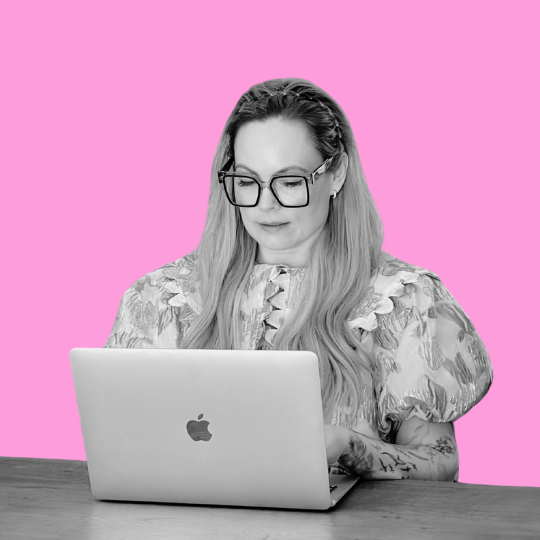
The Slow Businesswoman, Emmaline McAndrew, types on her laptop with a pink background.

The Slow Business Woman

Emm McAndrew knows what it means to juggle chronic illness, disability, neurodivergence and family life while running a business. She lives with ME, cPTSD, AuDHD, and cervical spondylosis, meaning she navigates sensory overwhelm, executive-function differences and family life while running a business.

The Slow Businesswoman provides information and education only. Nothing on this website, in blogs, emails, or courses should be considered medical, psychological, legal, tax, or financial advice, or a substitute for advice from a qualified professional who knows your circumstances. You remain responsible for your decisions; no liability is accepted for any loss or harm arising from use of the content. If you have concerns about a health or mental health condition, speak to your GP or another qualified clinician. Guest opinions are their own and do not necessarily reflect the views of The Slow Businesswoman.

© 2026 The Slow Businesswoman Ltd. | Company No: 16424263