
Employment wasn't built for limited or fluctuating energy
5 signs you need to leave your job

Most jobs are built for fixed hours, fixed expectations, and fixed output. They assume you’ll show up the same way every day, perform at the same level every week, and recover on schedule over a weekend.
If you live with limited or fluctuating energy, that’s not how your week works. And when it doesn’t fit, it’s easy to assume the problem is you. Not enough discipline, not enough resilience, not trying hard enough.
It usually isn’t. It’s a structural mismatch between how you work and how the job is built. Here’s five signs that this mismatch could be becoming a real issue for you.
Table of contents

1. You're fine until you're not (and there's no warning system)
2. Recovery time isn't built into your week, only into your sick days
Most jobs treat rest as something that happens outside work hours, or as an exception when you’re too unwell to function. There’s rarely any built-in recovery time within the working day or week itself.
For limited or fluctuating energy, that’s backwards. Recovery needs to be part of the plan, not a fallback for when things have already gone wrong.
A lot of jobs offer flexibility on paper, working from home, flexible hours, the odd half day, but flexibility isn’t the same as recovery. You can have all the flexibility in the world and still have no actual built-in space to recover before the next demand lands. Recovery has to be planned for, not just allowed.
3. You're heavily masking
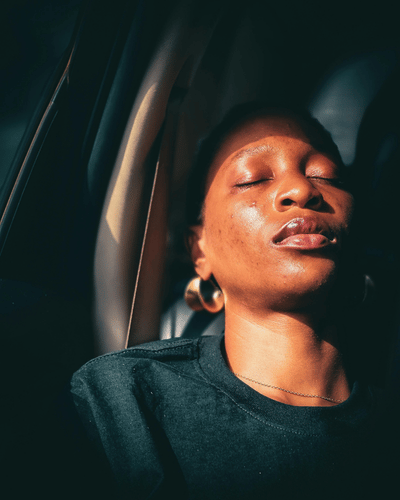
A lot of energy goes into looking fine. Sitting upright, sounding alert, getting through a meeting without anyone noticing what it’s costing you. A research survey of people managing chronic conditions at work found that fatigue and stress related to their conditions had a major impact on their ability to do their jobs, well beyond the visible symptoms.
If most of your energy at work goes into appearing capable rather than being capable, that’s not sustainable, no matter how good you’ve got at hiding it.
This kind of masking doesn’t show up on any HR report, but it’s still using up the same limited energy you need for the actual job. Over time it becomes its own job within the job, and it’s the one nobody’s paying you for.

4. Your performance is judged by output
Employment generally measures contribution by time at a desk or hours logged, not by what that time actually took out of you. Two people can sit through the same eight hours and walk away in completely different states.
If your job has no way to account for that difference, it will keep asking the same from you on your worst days as your best ones.
This is part of why pushing through often looks like the responsible choice in the moment. You show up, you get through the day, and the hours are logged. But what it costs to get there never factors into anyone’s assessment of your performance, including your own.
5. You've started planning your life around recovery
This is usually the clearest sign. Weekends become recovery time rather than rest time. Holidays exist to undo months of depletion rather than to enjoy. Your life starts being scheduled around what your job has left you with, rather than your job fitting around your life.
When it’s gone this far, the job isn’t just difficult; it’s the wrong structure for limited or fluctuating energy.
It’s a quiet shift, so it’s easy to miss while it’s happening. You don’t notice you’ve stopped making plans for a free weekend until you realise you haven’t made one in months, because you needed the time to recover from the week before.
The bottom line
None of this means you should hand in your notice tomorrow. If you’re thinking about leaving employment, the worst version of that plan is leaving with nothing in place, no income, no structure, no idea what comes next. That’s not freedom, it’s just a different kind of strain.
Self-employment isn’t a stopgap, and it isn’t a cure for a bad job. It’s a different structure, one you can actually build around limited or fluctuating energy, but only if it’s set up properly from the start (that’s the part most women skip).
A better alternative to employment
If you want to explore what that could look like for you, The Slow Business Method is my 8-week programme designed specifically for women with limited or fluctuating energy.
It covers everything from establishing sustainable business foundations to setting boundaries, marketing, and building income that still makes sense when life is unpredictable. You’re not figuring this out alone; you’re learning a structure that’s already worked for women managing exactly the same kind of energy you are.
That structure is the bit most people miss when they leave employment. Motivation and good intentions don’t hold up against a flare or a bad week. A proper foundation does. That’s what the eight weeks are built to give you, not a quick fix, but something that still works months and years from now.
Here’s what some of the women who’ve taken the programme say:
“The course has given me the confidence to set up a business that I can operate on my own terms and use my time differently in future to preserve energy and avoid burn out.” ~ Ruth, West Yorkshire
“Before the course, I was working at a pace that was wearing me out, without even realising I was experiencing burnout… The biggest thing it gave me was clarity and permission to take my foot off the gas and build my business in a way that actually works for me.” ~ Shelley, Lincslivesnatters Media
“After spending time learning this method, I feel a sense of confidence and direction I have yearned for years to plan a sustainable business that fits my needs.” ~ Amani, Liverpool

Frequently asked questions about chronic illness & work
How do I know if my job isn’t right for my energy levels, rather than me just struggling?
Look at the pattern, not the individual bad day. If you’re regularly masking, missing recovery time, or planning your life around your job rather than the other way round, that’s a structural problem with the job, not a personal failing.Is self-employment better than employment for women with chronic illness?
It can be. Self-employment gives you control over your schedule, your workload, and your pace in a way that most employment roles don’t. That said, it needs to be set up thoughtfully. Self-employment that replicates the pressure of employment isn’t a solution.What’s the difference between normal tiredness and the kind of fatigue this blog is talking about?
Normal tiredness usually lifts with a good night’s sleep or a weekend off. Fluctuating energy linked to a chronic condition doesn’t follow that pattern, it can persist regardless of rest and shift without warning.What types of work suit women with limited energy?
Freelancing, consulting, digital products, asynchronous service work, and portfolio working tend to be most compatible with fluctuating energy. The common factor is flexibility and control over when and how much you work.How do you start a business while still employed?
Start small and start slowly. Identify what skills you already have, what income you need, and what a realistic timeline looks like. You don’t need to quit first. Building gradually is a strategy, not a compromise.What is an energy-limiting condition?
An energy-limiting condition is any health condition that affects your available energy, either consistently or unpredictably. This includes ME/CFS, fibromyalgia, ADHD, autism, EDS, MCAS, and many others, as well as conditions that affect cognitive capacity, pain levels, or recovery time.Get your weekly dose of calm and clarity
If you’re ready to protect your energy, The Weekly Pause is for you. Every Monday, I share gentle reminders, research-backed insights, and practical tips to help you work smarter, not harder.
The Slow Business Woman
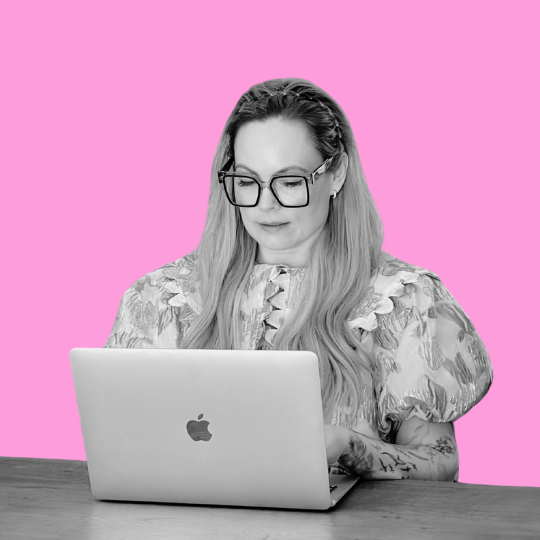
Emm McAndrew knows what it means to juggle chronic illness, disability, neurodivergence and family life while running a business. She lives with ME, cPTSD, AuDHD, and cervical spondylosis, meaning she navigates sensory overwhelm, executive-function differences and family life while running a business.
The Slow Businesswoman provides information and education only. Nothing on this website, in blogs, emails, or courses should be considered medical, psychological, legal, tax, or financial advice, or a substitute for advice from a qualified professional who knows your circumstances. You remain responsible for your decisions; no liability is accepted for any loss or harm arising from use of the content. If you have concerns about a health or mental health condition, speak to your GP or another qualified clinician. Guest opinions are their own and do not necessarily reflect the views of The Slow Businesswoman.