
a guide for the energy-limited
How to start a business when you have a chronic illness

You deserve to build a business that pays fairly and doesn’t affect your work-life work-health balance. The usual business advice doesn’t stick for those with an energy-limiting condition like CFS/ME and Fibromyalgia, or for neurodivergent burnout. So, I teach a different approach, one that’s built around your personal energy – which is different for everyone, even if they have the same health condition or disability. So here’s a guide on how to start a business with a chronic illness.

Business idea and energy mapping
Your business must fit your energy first, not the other way round. Treat energy like a budget. You plan it, you protect it, and you don’t spend what you don’t have.
To do this, we need to map your energy so there’s a solid foundation to work from.
So, grab a notepad and pen, your phone, or computer and let’s get into it.
Energy mapping in 3 easy steps
1. Audit your energy week
List the times of day you usually feel your best, your average, and your worst. Note your unique patterns across a typical week. Add in any medical or life admin that has to be done that week.
2. Define work blocks
- Pick your optimum work block length. That could be 30, 45, or 60-minute time blocks
- Decide how many of these blocks you can manage in the upcoming week and write them down/add them to a calendar (whicever works for you)
- Add in recovery blocks after each work block – 5 mins per 30 mins, 10 per 45 mins, and 25 mins for an hour block. This is the most important part of energy mapping and is what will make everything else achievable
- Recovery time means you have to take a real rest; so, no admin, no doom-scrolling on TikTok – you get the picture
- Count the total work blocks you can do in a week without crashing or burning out. We’ll call this your Weekly capacity.
3. Classify your weekly tasks by energy load
High load: deep thinking, video calls, and travel.
Medium load: content writing, proposals, and design work.
Low load: content scheduling, financial admin, and emails.
Aim to spend most work blocks on low to medium load tasks. Keep high-load tasks short and well-spaced out (which may mean you need to move them to another week or reduce the workload to account for it).
Business idea selection
Write a list of every business idea you have, then use the questions below to shortlist them. Need business ideas that work with chronic illness? Download my free guide: 25 income ideas for women with chronic illness.
- Does the work avoid known triggers, such as bright lights, noise, long travel, or frequent context switching
- Can the income from the business continue during low-energy weeks?
- Does this work feel calm, kind, and aligned with your values?
- Can you run it from home with minimal travel?
- Can you add recurring revenue/semi-passive income, for example, digital products, pre-recorded training, or a membership?
- What have you tried before? What failed/worked and why?
Keep the ideas that feel calm, earn fairly at a low capacity, and maintain your recovery time.

Create a one-page business plan
This is where you’ll work out the basics of your business; keep it to one page for now, as you can always beef it up later. This exercise is designed to help you get into the nitty gritty without getting tired before your business has even started.
- Target monthly income: pick a realistic number that covers your typical expenditure
- Capacity: add your weekly work blocks from your energy map
- Services/products you’ll offer: try to keep this to a 5 maximum for now. List how much you’ll charge for each (per product or per hour for services)
- Customer attraction: how you’ll find your customers or clients
- Marketing: how much time or money you may need to spend
- Risk controls: flare-up recovery plan, contingency plan for too little or too much income (believe me, you’ll need a contingency if your business takes off too quickly!)
If you want a ready-made structure, use my Break the Rules guide with a Slow Business Blueprint for a calm planning flow.

Pricing that protects your health and income
Undervaluing your work is the quickest path to overworking. Price for the real cost of the work, including your recovery time. This is done in a simple spreadsheet (Google Sheets is free and can be used on your smartphone). What you need to include:
- Your income target: mortgage/rent, bills, childcare, groceries, hairdressing, etc. Try to include everything, including savings
- Your business costs: things like software, travel, equipment, consumables, etc. It’s wise to add in a 15% buffer for sick time
- A simple calculation: that works out how many hours you’ll need to work per week to achieve your income target – if the hours are too high for your energy capacity, up your prices to match or reduce your target income
Plan in annual price rises without drama
- Increase your prices every year at the same time – plan this in from the very beginning so everyone expects it, then remind everyone 8 weeks in advance
- Keep the price increase message factual. Avoid apology. You are pricing to keep quality and protect your health
Your flare-up plan
A flare-up is not a failure; it’s a key signal that something needs attention. Instead of viewing it negatively, plan for it by developing a coping strategy and support systems. Recognising flare-ups as part of the business journey will allow you to respond with self-care and protect your income.
Before a flare
- Build a small marketing content bank: two emails, five social media posts, and text for your business email out-of-office auto-responder
- Document a handover with easy-to-follow steps for a trusted friend, colleague, or Virtual Assistant to follow while you recover
During a flare
- Activate your out-of-office.
- Pause all non-essential work.
- If you can, do one tiny task that reduces future stress, such as issuing a credit note. If you can’t, then do nothing; put your health first
After a flare
- Run a short review: what triggered it, what warning signs did you miss, what will you change to make things easier next time?
- Adjust your capacity and timeline for the next two weeks (or longer if you need to)
- Notify clients or customers of any new dates. Most people accept clear information and firm timelines, so be straight to the point

Why starting a business supports you better
Starting a business can fit your work-health balance better because you control the pace and shape of the work. For example, you can choose to have short sessions or fewer calls. You get to set clear boundaries, like two-day response times and no evening messages. You can also remove commuting and sensory overload, which helps to cut recovery time. You can plan around good-energy hours, then rest without guilt on low days.
My Slow Business Method will help you to set up and run your business with work-life balance at the forefront. Eight weeks, small actions, steady progress, and and affordable price tag. Join the waitlist to get first access when the programme re-opens.
Get your weekly dose of calm and clarity
If you’re ready to protect your energy, The Weekly Pause is for you. Every Monday, I share gentle reminders, research-backed insights, and practical tips to help you work smarter, not harder.
The Slow Business Woman
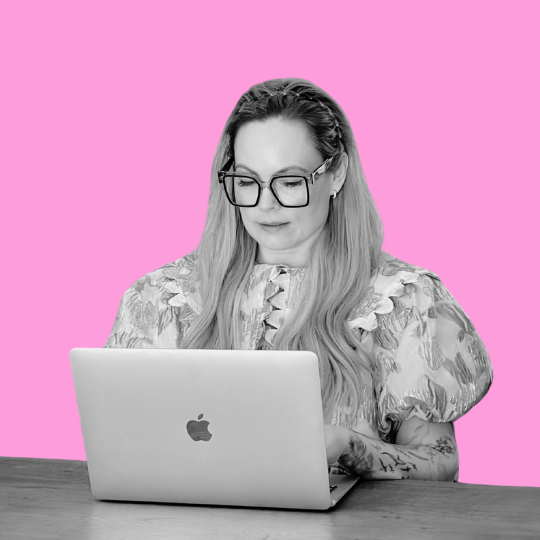
Emm McAndrew knows what it means to juggle chronic illness, disability, neurodivergence and family life while running a business. She lives with ME, cPTSD, AuDHD, and cervical spondylosis, meaning she navigates sensory overwhelm, executive-function differences and family life while running a business.
The Slow Businesswoman provides information and education only. Nothing on this website, in blogs, emails, or courses should be considered medical, psychological, legal, tax, or financial advice, or a substitute for advice from a qualified professional who knows your circumstances. You remain responsible for your decisions; no liability is accepted for any loss or harm arising from use of the content. If you have concerns about a health or mental health condition, speak to your GP or another qualified clinician. Guest opinions are their own and do not necessarily reflect the views of The Slow Businesswoman.